Showing posts with label crime fiction. Show all posts

Saturday, 1 February 2014

Death Comes to Pemberley: P.D. James

Death Comes to Pemberley

by P.D. James


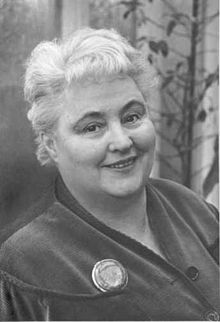
P.D. James confesses, in her essay on the genesis of the novel that she is 'ambivalent' about sequels. 'The greatest writing pleasure for me is in the creation of original characters, and I have never been tempted to take over another writer's people or world'.  But that is exactly what she has done in setting her new murder mystery in the heartland of Jane Austen's world - Pemberley, the home of Darcy and his wife Elizabeth Bennet. James goes on to explain that 'Austen's characters take such a hold on our imaginations that the wish to know more of them is irresistible'.  James is not the first to enter Austen's fictional domain with her own take on it - and currently another novel 'Longbourn', by Jo Baker, is exploring the upstairs/downstairs world of Elizabeth Bennet's family home and there is also 'Georgiana Darcy's Diary' by Anna Elliott and Laura Masselos.  There is also the very entertaining 'Lydia Bennet's Blog', by Valerie Laws.

In 'Death Comes to Pemberley', Darcy and Elizabeth have been married for six years and have a young son.  Pemberley is a tranquil, idyllic place - Mr Bennet is a frequent, welcome visitor, and Bingley and Elizabeth's sister Jane have established themselves nearby.  The one source of disharmony is the youngest Bennet daughter Lydia, married to the dissolute Wickham.  Lydia is 'received' (though scarcely welcomed) by her sisters for occasional visits, but her husband is barred.  Both are impecunious and dependent on their more fortunate relations and Lydia has an attitude of grievance towards her sisters.

It's hardly surprising, given Austen's portrayal of Lydia in Pride and Prejudice, that James has chosen Lydia to be the messenger of an event that is going to break the tranquility of Pemberley for ever.  On the eve of the annual ball, a carriage comes to a violent halt at the door and Lydia tumbles out screaming that her husband has been murdered.  Someone has indeed been murdered, but it is Wickham who is arrested for the crime.  Darcy, Elizabeth and their friends must now come to aid of a man they despise, but who is publicly part of their family.

I found the novel rather slow and the style more ponderous than Austen's - particularly the dialogue. But the plot is absorbing and the beautifully researched details of 18th century criminal procedure are fascinating, particularly to someone who once studied law with a view to being called to the Bar. It gives a very clear picture of how the law worked in small rural communities.  Darcy, who is a magistrate, is also a reformer, arguing for an appeal court to review the decisions of juries.  'Could it not be possible to have an appeal court consisting of three, or perhaps five, judges to be convened if there were dissension over a difficult point of law?'  His friend, Alveston, a barrister, comments that the jury would be outraged if they felt that their decision was to be challenged by a judge.  Public opinion, he proposes, is the best court of appeal;  'I can assure you there is nothing more powerful than the English when seized with righteous indignation'.  And so it proves.

I enjoyed this excursion into Jane Austen's world - I hope I'm still around at the age of 90 and still capable of writing such a complex novel as this one!  I wonder what she's plotting now?


Thursday, 5 December 2013

River of Shadows and Blood Sisters - Two Italian Thrillers

River of Shadows

by Valerio Varesi


This novel is set on the foggy plain of the Po, and the river is rising after intense rain - the wide, placid summer river becoming a winter monster of churning currents and relentless spread. In the darkness, a barge casts off from its mooring mysteriously on the flood tide and no one knows if the owner, Tonna, is on board.  At the same time there's an apparent suicide leap from the window of a local hospital.

Commissario Soneri is called in to investigate.  He finds himself unraveling a nightmare that involves conflicts between Communist and Fascist that date back to the atrocities of World War 2, but which still divide parts of Italy today.  How can the Commissario know who is telling the truth, while avoiding the distractions of local food and wine and his barrister girlfriend, Angela, who likes high-risk sexual encounters in public places?  There's a slightly comic undertow to the darkness of the main plot.

The book is beautifully written, the characters and the location vivid and real, and the dialogue pitch-perfect.  I'm not sure that I completely understand the fine details of the plot yet, but the complex political nature of Italian daily life is one hundred per cent true to what I see around me.  

Top quality crime fiction - and I've just downloaded the next in the series.  At £2.57 for the Kindle edition it's cheap as chips!


Blood Sisters

by Alessandro Perissinotto


I'm a great fan of the Montalbano novels, also Donna Leon, and always on the lookout for a new Italian thriller writer to match my favourite locations with some good suspense.

This book was recommended by a friend and it's an enjoyable read with a good protagonist. Anna Pavesi is a psychologist by profession, newly separated from her husband and rather short of money. Having successfully tracked down the missing son of a rich Milanese, Anna finds herself being persuaded to look for a missing body. It's set in Bergamo and Milan, on the foggy plain of the river Po - an area I know well, having driven across it through fog and freezing fog many times! It adds considerable atmosphere to the book. 

There are some interesting characters in this novel and a couple of nice twists at the end. It didn't have quite enough edge for me and either the writing, or the translation, seemed to lack sparkle. But I would definitely read another of his novels, though at over £5.00 for a Kindle edition it's not a cheap read.

Wednesday, 27 November 2013

The Blackhouse, by Peter May

The Blackhouse,

by Peter May

Published by Quercus


This is the first part of the Lewis Trilogy and the only one I've read so far, though I have down-loaded the others.  The Blackhouse is Tartan Noir - very, very Noir, so be prepared for some gruesome twists and turns.  A man is discovered hanged and mutilated in a boat shed at a small village on the Isle of Lewis.  Fin Macleod is sent to investigate, partly because it's a copy-killing of a murder he's been investigating in Edinburgh, and partly because Crobost is his home village.  The timing is bad - Fin is grieving for his young son, killed in an accident, and for the marriage that couldn't survive the loss.

Fin has rarely been back to his roots, for reasons that gradually become very clear in the novel.  But, as he investigates the brutal murder, he has to confront the fall-out from things that happened in his childhood - a youthful obsession with Marsaili, now married to his old friend Artair - and the strange events that happened on a coming-of-age trip to cull the 'guga' on a remote rocky island - events that have had long-reaching consequences.


The claustrophobic nature of the Hebridean island is perfectly evoked in the novel - you can smell the peat and feel the constant Atlantic wind tugging at your hair.  The roots of the crime lie in the nature of the island community, with its gossiping tongues and bleak Calvinist values, as well as strong codes of honour that protect both the innocent and the guilty.

Peter May is a Scottish author, born in Glasgow, who has written literally hundreds of television plays and episodes for series and also has a dozen best-selling thrillers on the shelves as well.  That kind of experience shows in the taut dialogue and the spare writing - not a wasted word. Definitely a must-read!

The Blackhouse, Peter May, Quercus


Thursday, 1 August 2013

The Cuckoo's Calling: Robert Galbraith aka JK Rowling

The Cuckoo’s Calling

by Robert Galbraith aka JK Rowling

Published by Bloomsbury

Crime Fiction


This book hadn’t even stalked across my radar, even though I’m a crime fiction addict, until I saw the controversy about the author.  Shock! Horror!  Robert Galbraith was a sock-puppet - supposedly a debut author with an army background. An unknown quantity who didn't actually exist.  Apparently the book had sold less than 500 copies in more than three months, despite having wonderful reviews, and bookshops weren’t stocking it.  This will come as no surprise to fellow mid-list authors of well-written, well-constructed books who don’t have the benefit of celebrity, a serial following, or their publishers' (strictly rationed) publicity machine, to sell their books.  Then, overnight, someone’s sister-in-law tweeted that the real author was JK Rowling herself in disguise.  Result?  A stampede to the cash tills.  Bloomsbury had to order 300,000 copies from the printers overnight!  It’s a depressing story, unless you’re JKR.

So, I thought, is the book really any good?  I was one of those who couldn’t get past the first pages of the Casual Vacancy, so I was dubious.  I downloaded a free sample onto my Kindle and thought I’d take a quick look.

The Cuckoo’s Calling is a good read.  There are plenty of people out there willing to knock JKR - I’m not one of them, but neither am I a slavish admirer.  She knows how to tell a story and construct a plot and she can write persuasively.  Harry Potter was a stroke of genius that hit a nerve at exactly the right moment and created a world of magic that both children and adults could get carried off into.  As a mainstream author her books aren’t in that special category, which is a big problem for her. 

I started to read the Cuckoo in the evening just before I went to bed and when the sample ran out, I wanted to read on and so I bought the book.  Woken by a thunderstorm in the middle of the night and unable to sleep for the crashing and flashing, I kept on reading.  I found her characters believable and appealing.  Cormoran Strike, the private investigator, isn’t original, but he’s good to spend time with - just enough of the rough to appeal to women, but smooth and intelligent when it matters.  The temp who turns up on his doorstep at the wrong moment, Robin, is a woman who believes her life is already mapped out for her, but finds that it isn’t.  The case of the celebrity super-model who falls from a top floor window, takes us into the world that Rowling inhabits - running from the paparazzi, having your phone hacked, parties and night clubs and designer clothes as well as the normal ups and downs of human life.  I found some of the lengthy detail of the criminal investigation a bit boring sometimes, but this is Rowling/Galbraith’s first crime novel, so some leeway is allowed.

This is the literary end of the crime spectrum, with a lot of focus on character, motivation and psychology.  The plot is just a framework to hang it on. It’s not quite in the Kate Atkinson category, but I’ll be reading the next Galbraith. The real crime is the fact that The Cuckoo’s Calling wasn’t getting any attention because it was by an unknown author.

Crime Fiction you might not have discovered yet:
Avril Joy’s Blood Tide
John AA Logan:  The Survival of Thomas Ford

Thursday, 11 July 2013

I am Half Sick of Shadows (Flavia de Luce) by Alan Bradley

I am Half Sick of Shadows

(Flavia de Luce #4)

by Alan Bradley

Published by Random House

Mystery/Crime Fiction

I do like a bit of light-hearted stuff among all the serious books I read! This is the first novel that I've read of the Flavia de Luce series, and I'm absolutely hooked. It's set in rural England in the 1950s. Flavia, aged 11, amateur sleuth, precocious amateur chemist and expert on poisons, is a wonderful character. She lives with her father, two unsympathetic sisters, a house-keeper and her father's batman 'Dogger', in a large house, which is falling apart due to the fact that its owner, Flavia's mother Harriet, has disappeared in Tibet without leaving a will.

It's a totally dysfunctional family, and a totally off-the-wall plot. Desperate for money to keep the old pile, and the family, from complete ruin, Colonel de Luce has rented the house out to a film crew just before Christmas. Mayhem, madness and a huge quantity of snow descend overnight, locking everyone indoors just in time for a grisly murder. And Flavia, being Flavia, is first on the scene.

This is a YA book for adults and I'm definitely going to seek out the others - including the new one just out, called Speaking from Among the Bones. It reminds me of the Ladies No 1 Detective Agency - the same sense of humour and gentle escapism. 

Alan Bradley, like Alexander McCall Smith, is not a young author - born in 1938 - and didn't begin the Flavia de Luce stories until 2006, when he wrote the beginning of a story for the Crime Dagger Debut prize and found that he'd won!  It only goes to show.......
PS I found this book on Pinterest, browsing book covers and authors - proof that it is a good place for authors to be!

Saturday, 23 March 2013

The Back Road: Rachel Abbott


The Back Road

by Rachel Abbott


Crime/Thriller


Having just read The Back Road in two sittings, I can understand why Rachel Abbott’s first novel, Only the Innocent, reached the Amazon no.1 slot and stayed there.  The Back Road will probably do the same.  Not only is it tightly plotted, with intricate twists and turns, the writing is also of the highest standard.

The novel opens with a punch in the gut and goes on to tantalise.  Leo and her sister Ellie have some seriously bad family history, but both girls have made good - Leo is a successful Life Coach and Ellie has an apparently perfect marriage and affluent life-style.  Ellie has just moved into their childhood home - which she has inherited - and is having a dinner party to celebrate its renovation.  Leo has come, reluctantly, and is courageously trying to face her demons.

The pace slows, momentarily, for us to meet the dinner guests - a mixture of childhood friends and their partners and a new, very attractive, policeman who has recently moved into the village.  The celebrations are overshadowed by a terrible accident that had occurred the previous evening - when a young girl had been knocked down on the back road and left for dead.  Ellie is nursing the girl in the hospital intensive care unit and the prognosis isn’t good.

It soon emerges that several of the guests were not where they should have been when the accident took place (including Ellie) and several couples are hiding secrets from each other - secrets that will put their lives in danger, because (in true Agatha Christie style) one of the guests at the table is a killer.

It’s a very complex plot, which owes as much to Ruth Rendell’s psychological thriller genre as it does to Christie’s plotting, and although I worked out who the likely killer was, a few pages from the end, it only racked up the tension and the climax was completely unexpected.  Past and present collide head on in the final pages. This novel is a very original mix of traditional crime/thriller elements that really, really, works.

Thanks Rachel - you had me hooked, and, for a puzzle addict, you gave me lots to think about!
Rachel has also, generously, given me a detailed interview talking about her writing generally and The Back Road specifically.  To read what she has to say, click here. 

The Back Road
Only the Innocent
Rachel Abbott's Blog

I'm a member of the Reading Between the Lines review collective. Take a look!


Thursday, 14 February 2013

The Adventures of Margery Allingham by Julia Jones

The great thing about e-books is that you can update them very easily when new information becomes available.  Julia Jones’ biography of Margery Allingham was first published in 1991 by William Heinemann and has just been republished under her own imprint ‘Golden Duck’ with new photographs and updated information.

The title is a little misleading, since Allingham’s adventures are ‘mental and moral’, and mainly on paper, channelled through her hero Albert Campion in the groundbreaking thrillers she wrote through four decades. I read her books when I was in my twenties and liked them more than Agatha Christie and Dorothy Sayers - there was always an element of humour, clowning, with an undertow of morality.  They reminded me a little of the old Mystery plays - a mix of buffoonery and serious discussion of Right and Wrong, the one highlighting the other.  Albert Campion - the mysterious, aristocratic figure at the centre of the plot, is both the buffoon and the moral compass of the novel.

I was always interested to know more about the author who wrote the novels, but somehow missed the publication of Julia’s book first time out (where was I?)  Fortunately I’ve now managed to rectify that omission.  Reading this biography of Margery Allingham has illuminated the novels for me in just the way I would have hoped. 

I’d already read about Margery’s disfunctional, workaholic, journalistic family in Julia’s new book ‘Fifty Years in the Fiction Factory’, which shows Margery’s father’s heritage, writing serials for ‘penny dreadfuls’, and depicts his marriage to Margery’s mother as turbulent and unsatisfactory. Em Allingham didn’t care much for marriage or motherhood and had huge mood swings that were difficult to live with.  Margery was a precocious child who grew up nervy, and insecure, with a pronounced stammer.  She didn’t thrive on education and left school at 16 to her parents’ disappointment. Encouraged to write as a young child by her parents, there seemed no other career she would ever consider and she began to submit to periodicals, as her father had done, and wrote reviews and story-lines for a film magazine.

The plot of Margery’s first novel,  published while she was still a teenager, was ‘found’ during a seance with her family around a Weedja board.  Her subsequent plots were rather more thought-out, but she was always an instinctive writer.

If Margery was professionally precocious, she was emotionally much slower to mature.  There was a youthful ‘crush’ on a young female friend, a brief love affair with a man, before she married someone she’d known for years - the son of a woman her father had almost married in his youth - the artist Philip (Pip) Youngman Carter.  He was socially confident, handsome in a silent movie ‘spivvy’ kind of way - the kind of man depicted in cartoon casually folded against a wall, smoking a cigarette in a long holder, wearing a striped blazer and white trousers, being charming to women.  He had no regular work, but designed Margery’s book covers and gave her editorial feedback. They lived in a kind of student menage with two or three other friends, all mainly supported by Margery’s writing.

She had been brought up with a workaholic writing ethic - her father wrote thousands of words a week come hell or high water until he died, worn out by the treadmill.  Margery did the same.  She was overweight and in poor health - probably because of thyroid problems that often went untreated.  This was partly her fault - she hated consulting doctors - and partly because the doctors she did consult seem to have been less than competent.  At one point she was sectioned and given electro-convulsive therapy for depression probably caused by her thyroid condition.  As well as health issues, she was constantly pursued by the Inland Revenue and lived, until the end, haunted by the fear that she was going to be made bankrupt by their demands. Margery wrote book after book to pay the tax bills racked up by her previous publications.

Her marriage to Pip, which had begun with such cheerful, youthful optimism, soon stagnated.  Pip was extremely selfish, unwilling to have children, and a serial adulterer.  While he philandered in London, living the high life (he was in the same social circle as Prince Philip), Margery stayed in her Essex home and wrote.  When doctors found a lump in her breast, she ignored it.

Julia at the Book Launch
After her death, Margery’s papers and those of her father, were left to her younger sister Joyce, who had lived with her during the final decade of her life, and - through Joyce - they were made available to Julia Jones.  The results are two carefully researched and beautifully written family stories - 'Fifty Years in the Fiction Factory: the Working Life of Herbert Allingham', and ‘The Adventures of Margery Allingham’.  I enjoyed them both and, as a good biography should, have been tempted to re-read the novels.                                        

Saturday, 12 January 2013

Like False Money: Penny Grubb

Genre - Crime Thriller

As most of you know, my secret addiction is to thrillers, which I consume like (and mostly instead of) boxes of chocs.  So I'm always happy to discover a new author.  Having read every Camilleri, every Anne Zouroudi or Kate Atkinson and, over Christmas, re-read every Margery Allingham I possess, I was glad when Penny Grubb's novel arrived through an online book site I review for (the Booktweeting service), with a new, female, protagonist I hadn't met before.

Like False Money is the first book in Penny Grubb’s series about the young private investigator Annie Raymond.  It’s Annie’s first - temporary - job and she knows that she has to prove herself in order to stay in the business.   The agency that employs her is based in Hull, a city in a part of England that’s unfamiliar to her and probably to many of the readers too.  It’s a good setting - there’s a dramatic landscape of sea and fenland and the city provides a wide range of class and racial contrast with all the social conflict created by a once thriving international port now struggling for its existence in tough economic times.

Annie Raymond is sent to Hull because one of the agency’s directors has fallen down a staircase and broken her leg. It takes Annie a while to realise that this may not have been entirely accidental.  In the beginning there isn’t a lot to do except make coffee for her sofa-bound employer.  There’s only one case to work on that doesn’t seem promising - investigating the apparently accidental death of a local journalist, Terry Martin, whose parents are obsessed by the desire to know the truth about how he died and where he was in the two days before his body was found.  The trail soon peters out and - with no other work on the books - Annie fears that she will soon be on a train back to London.

But nothing is accidental  - after all this is a thriller.  Why are the directors of the agency at war with each other?  Who are the three young girls who come to the funeral?  And what do they have to do with the joyriders who interrupt the funeral procession?  What is it that Terry has discovered in the disused shed?   Too late, Annie realises that her intuitions have let her down and her own life is in danger from a killer she didn’t suspect.  The ending is absolutely gripping.

I liked the way the author spelled out the realities of life as a private investigator in the modern world - the bread and butter slog of finding people for worried families, plugging the gaps left by an overworked, underfunded police force.  Annie’s relationship with the police is sometimes strained by mistrust (and sometimes by lust!) but in the end they need each other.  People will often talk to an ordinary person and give them information they wouldn’t give to the police.  Annie has the time to listen and her intuition isn’t hemmed in by bureaucratic rules.

I enjoyed this book very much.  It was, at the time it was written, a ‘first book’ and I sometimes felt that I was being given too much information too fast - the clues coming at me like a blizzard.  But that’s a minor quibble  -  the writing is assured and in places very good indeed and the plotting is clever. Not surprising it was nominated for a John Creasey Dagger Award.   Annie Raymond is an interesting character in her own right and I will be reading the next book in the series The Doll Makers which won the Crime Writers Association Debut Dagger Award.

Like False Money is published by Robert Hale and is also available as an e-book.

Monday, 28 May 2012

Blood Tide by Avril Joy

Blood Tide, featuring Private Investigator Danny Beck, is this month's E-book and, because I'd really enjoyed Avril Joy's novel  The Orchid House, I plunged into her first thriller with high expectations and wasn't disappointed.

It’s Newcastle, in the north east of England, and Danny Beck, recently widowed, has left his job in the prison service and doesn’t know what to do with the rest of his life.  A friend who runs a small private investigation agency has asked him to mind the shop while he goes to Australia to visit his family, and Danny - tired of living in an empty house with nothing to do - has agreed.

On his way to the office, Danny crosses one of the bridges over the Tyne and finds a young girl standing on the girders ready to jump off.  Trained to talk prisoners out of difficult situations, Danny tries to talk her down, but in the end she jumps, throwing him a piece of paper on which she’s written a name and a number.

Danny, who’d expected to be minding the telephone and the desk, or searching for a lost dog or two, finds himself at the heart of an investigation into a major international crime ring centred around a night club called the After Dark, where all kinds of perverted sexual tastes are catered for behind sealed doors.  It’s owned by Harry Munroe, a rich businessman who has powerful friends and the protection of violent thugs who don’t balk at murder.

One of the girls who works at the club, Gina, agrees to talk to Danny, but is too afraid to give much information away.  Then she goes missing and Danny’s search for her brings him up against Aidan, a young ex-soldier traumatised by service in Afghanistan.  He, too, is searching for Gina and has been following Danny’s every move.  Unstable and easily provoked into violence, armed with a sniper rifle, Aidan is someone Danny needs to have on his side rather than against him.  Aidan takes a lot of persuading.

There’s a rich cast of characters in this book, beginning with Danny himself - a complex, intelligent man, bruised by past events, unable to get over the death of his wife, still partly in love with the ex-girlfriend, Sarah, who is now married to his best friend.  Sarah is an artist, struggling with domesticity and her marriage to Tom, who is an ambitious prison governor, willing to turn a blind eye when necessary and without Danny’s moral scruples.  Then there’s Danny’s father, Joseph, one of a hardy breed of Northumberland moor dwellers, independent, cantankerous, but a man worth knowing.  And Sunil, owner of the Indian restaurant beneath the office who becomes Danny’s self-appointed minder.

The landscape of ‘Geordie-land’ is so beautifully drawn - the lilting rhythms of the speech, the curry houses, the old streets around the Tyne.  I could hear it, smell it, see it.  Avril says that when she set out to write the novel she was ‘exploring the themes that I am drawn to as a writer, among which are: the lives of abused and disenfranchised women, prison and the dark side, loss and the healing power of friendship and love, our deep connection with the past and with the landscape in which we live.’

I was gripped by this thriller from beginning to end.  I’d just finished a newly published Italian novel hyped as ‘the new Montalbano’, with all the resources of a big publishing house behind it,  but found the book a struggle to read and totally lacking in the kind of interest and good writing you need if crime fiction is to be anything more than just a plot-puzzle.   Blood Tide, by comparison, was in a different league, perhaps informed by the years that Avril worked in the prison education system which gives it a depth of real knowledge behind the characters and their motivations - on both sides of the legal divide. Avril is also a poet and this gives her prose another dimension.

Avril Joy’s thriller was almost picked up by two big publishing houses.  The story is a familiar one to many Kindle authors.   Avril writes:

When I first sent the novel to my agent I got an immediate and positive response – she liked it – she particularly liked the main characters and the dialogue. Things were looking good. It was picked up more or less straight away by an editor in a London publishing house who was keen to commission it. It went to the States to the co-publishers; was read there, and they declared in its favour. It looked like full steam ahead. I supplied the English publishers with photo, biography etc, etc. I foolishly, naively perhaps, thought we were home and dry.

Then suddenly everything went very quiet until finally after some months the editor said she was sorry but she was no longer in a position to commission crime fiction – not until 2012 at least. The story rolled on from there with other thwarted attempts (which I won’t go into) to sell by my agent until we finally agreed that the best way forward was Kindle!


All I can say is ‘Thank goodness for E-publishing’!  Those publishers are going to regret their decision to let Blood Tide slip, because Danny Beck has all the hall-marks of a classic detective and I can’t wait for the sequel!

Avril Joy blogs at Writing Junkie  

*This review first appeared on the Indie E-Book Review site  edited by Cally Phillips - an excellent guide to the best in E-books.

Monday, 23 April 2012

The Survival of Thomas Ford: John AA Logan

This is my second E-book this month after Catherine Czerkawska’s Curiosity Cabinet, and both books really demonstrate the quality that is available on the E-platforms.  Both books were turned down by publishers after ‘rave rejections’, for marketing concerns and decisions that had nothing to do with the books themselves.

That both books have been in the top 5 sellers on Amazon demonstrates just how off-the-mark publishers have been recently.  Even celebrity memoirs aren’t selling as well and Dickens is languishing behind them too.

The Survival of Thomas Ford is a thriller that is at times extremely dark.  John Logan manages to get inside the mind of a teenage psychopath with chilling reality.  Thomas Ford loses his wife in a car crash caused by Jimmy and his friend Robert.  Ford is the only survivor and spends months in hospital recovering.  Despite his injuries he remembers, very clearly, the car and its occupants.  The police find it hard to believe him and for a while both the police and his in-laws suspect that Ford may have caused the accident himself.

Jimmy’s girl-friend is a cleaner at the hospital.  When he discovers that Thomas Ford is not only alive, but has given the police a description of him and his car, he decides that Ford must be removed.

The novel is very well written (crime fiction so often isn’t) and gripping all the way to the grisly end.  If you enjoyed the Wasp Factory and Train Spotting, or even if (like me) you didn’t, you’ll like this.    

Thursday, 5 April 2012

S.J. Parris: Prophecy

Prophecy is the second Giordano Bruno book and Stephanie Merritt's style has become much more assured.  This novel is much stronger on plot than the first (Heresy) - I found it gripping all the way through.  The historical background is beautifully done.  The detail is rich and many layered and made me feel that I really was in Tudor London.  There are no 'obvious' touches - the research doesn't show at all.

Giordano Bruno - heretic and ex-monk - is a guest at the French embassy in London at the request of King Henri of France.  He finds himself at the centre of a conspiracy to put Mary, Queen of the Scots, (currently imprisoned at Sheffield Castle) on the English throne and restore a catholic monarchy.  Bruno, paid by Walsingham to spy for Queen Elizabeth, finds his position very uncomfortable.  A young maid-in-waiting to the queen has been murdered with strange astrological symbols carved upon her body and all the evidence points towards the supporters of Mary Stuart.  Soon, Bruno's own life is in danger.  When the ambassador's wife returns from Paris and makes it clear that she wants Bruno's body - very much alive - in her bed, his loyalties are also put to the test.


This is a five star read for lovers of historical crime fiction.  I can't wait to read the new book - Sacrilege - out at the end of April. 

Thursday, 8 March 2012

The Return of Captain John Emmett: Elizabeth Speller


I bought The Return of Captain John Emmett and began to read it believing it to be  literary fiction.  I was quite surprised (and pleased) to find it morph into a thriller.  Laurence Bartram's life, like thousands of others, has been dislocated by the first world war, and his mind too has been affected by personal trauma.  As the narrator remarks 'Extreme violence changes everything.'   When he's approached by a young woman who asks him to try to find the truth behind her brother's suicide, Laurence agrees partly because his life is empty and partly because the boys had been childhood friends.  Very soon he realises that there is more to John Emmett's death than has ever been acknowledged.  A series of killings, beginning with the death of a young officer on the front line, comes to light and Laurence is drawn into a complicated, dangerous investigation where nothing is quite what it seems.  As Laurence says to his friend Charles,  'I didn't know it wasn't going to be simple.  It isn't like your storybook sleuths.  Everybody isn't either good or bad, with clues and a tidy solution to be unravelled.  Everything here goes round in circles.'

I enjoyed the novel;  the period atmosphere is beautifully evoked and it's well paced and plotted.  It kept me guessing too - just when I thought I had an inkling about who the perpetrator was, the ground shifted under me.   There was only one reservation.  The prose is curiously dispassionate - though this may be intentional - echoing the emotional detachment of the narrator.  It was all very careful and elegant - something you can admire yet not be moved by.  I would have liked to be more involved.

This is Elizabeth Speller's first novel.  She wrote a memoir, which I read a couple of years ago, called The Sunlight on the Garden, about her difficult childhood.  That, too, had a certain detachment that prevented me from being emotionally involved with the characters in it. So perhaps this coolness is a characteristic of the author's prose.   Odd, because Elizabeth is a brilliant poet who has won several prizes for her poetry, which you can read online on her website.

Although this is literary crime fiction, there are several elements of the classic crime novel  in The Return of Captain John Emmett - the lonely, slightly awkward, male detective who has an upper-class sidekick who goes fact finding - in this story it's the old school chum Charles with his private income and high-powered sports car.    The open ending leads me to believe that Laurence and Charles will be problem solving again quite soon.  And I will be happily reading on, though not quite as enthusiastically as I read Kate Atkinson or Ann Zouroudi.

The novel is already a best seller, but the author has had a great deal of help to get this far.   In the acknowledgements she admits to being 'extremely grateful' to her agent and the two assistants who apparently helped to get 'the first draft of this book to a state where it could be considered a novel.'  She also thanks Lenni Goodings at Virago for 'her confidence and continued investment' which were 'hugely encouraging'.    A copy-editor and another publisher's editor are also thanked for 'pushing the book forward', not to mention the assistance of Richard Holmes.   Publishing isn't a level playing field these days.  I wonder how many other brilliant first novels are out there, being lamented by talented writers who don't have that kind of support network.   This may sound rather ungracious, but it's a fact of modern publishing.  Who you know is important and having an enthusiastic agent is essential if you want to be hyped into best-sellerdom.

Wednesday, 15 February 2012

Two Thrillers: Jar City and Before I go to Sleep


Jar City: Arnaldur Indridasun
As a fan of the Killing, the Girl with the Dragon Tattoo and Wallander, I was delighted to find a new Just-South-of-the-Arctic-Circle  author.  Arnaldur Indridason is Icelandic and his books are set on this cold northern island with its long dark winters, twenty four hour summer days and an inward-looking population of only about 300,000 people.  Jar City is  brutal, absolutely convincing and compellingly written.  I like his characters - the morose detective whose wife divorced him years earlier; the daughter who suffers from drug addiction;  his female side-kick, and the cast of strange characters who inhabit isolated, wind-blown hamlets on the edge of the ocean.

Jar City is a lab which contains biological specimens.   When a middle-aged man is found murdered in his flat with no obvious suspects, a photograph suggests a link to the death of a small girl many years earlier (no it's not about child abuse!).   The solution to the murder and the link, lies in Jar City, courtesy of a rogue pathologist.

The book became a film a few years ago which was a Guardian/Observer film of the week and got four stars from Rotten Tomatoes.  I immediately obtained a copy of the film and watched it, but if I hadn't read the book first I would have found the film quite confusing.

Jar City is the first in a series and I'll definitely be reading more of Indridason's work.


Before I go to Sleep: S J Watson
This is a really excellent thriller.  Although the idea of using amnesia as a device has been employed several times before, the plot still had originality.  A woman wakes up every morning, with no idea who she is, or the identity of the man beside her. Every evening when she goes to sleep she knows that she will forget everything that happened during that day.

As I sleep, my mind will erase everything I did today. I will wake up tomorrow as I did this morning. Thinking I’m still a child. Thinking I have a whole lifetime of choice ahead of me …’

 Every morning the man who shares Christine's bed tells her the story of her life so far and she has to believe him because she has no memories to contradict him.....    Cue, danger!


But there is also a doctor in her life, one who is convinced that her condition is curable.  He encourages her to keep a secret journal and telephones her every morning to tell her where to find it.  Without a memory, Christine is vulnerable, unable to make rational decisions, unable to know whether what she is being told is true.  Her journal is the only record of her life that she can trust.  And the story it begins to unfold is shocking and unexpected. 

S.J. Watson is a product of the new Faber academy for writers - it will be interesting to see how many of them make it into the best-seller charts the way this book has.  I thoroughly enjoyed this novel, found it convincing, and will happily read anything else by S.J. Watson. 

Friday, 23 December 2011

The Best of 2011

So what has stayed in my head after a year of reading?

Of the fiction I read, I'm still thinking about Sue Gee's 'The Mysteries of Glass'  and Maggie O'Farrell's 'The Hand that First Held Mine' - both fabulous novels.    'Sex and Stravinsky' by Barbara Trapido is up there too with Michael Ondaatje's 'Divisadero' (though I'm still mulling that one over).

The most memorable of the light romantic reads is Linda Gillard's 'House of Silence', though it's certainly more than romantic fiction and Avril Joy's 'The Orchid House' runs it a close second. My favourite short stories were the Raymond Carver collection 'What We Talk About When We Talk About Love'.

I've read a lot of poetry this year and the ones that have 'stuck' are Selected Poems by Carol Ann Duffy and the collected poems of Tomas Transtromer.  Of the new collections that have come my way this year I've loved Isobel Dixon's 'The Tempest Prognosticator' and Tim Jones' 'Men Briefly Explained'.  Both would have to be up for the 'Title of the Year' prize!

Top of the list for crime fiction has to be 'Snowdrops' by A.D. Miller, the Montalbano novels of Andrea Camilleri, the latest Anne Zouroudi and, of course, Kate Atkinson.  It's been a good year for crime novels.

Best non-fiction has to be Matthew Hollis's biography of Edward Thomas (though it never went deep enough for me), and the wonderful biography of Raymond Carver, A Writer's Life, by Carol Sklenicka.

The most disappointing book of the year, for me, had to be John le Carre's 'Our Kind of Traitor', which was so structurally flawed I was consciously re-arranging it in my head as I was reading.  He's a wonderful writer, but this was way below par.  

Unfinished Reads:    I haven't managed to finish The Crimson Petal and the White, so that's my main aim for 2012.  This year has been so busy, long books have been at a disadvantage. 

Looking forward to seeing what's on my Christmas Kindle (I have a wish-list 3 pages long on Amazon!)  -  and hoping for a hardcopy of Julia Blackburn's Thin Paths in Italy.  She lives just over the border from me in Liguria, but in the same mountains and I can't wait to see what she has to say about this area.

Tanti Auguri for Christmas and New Year to everyone!   And happy reading!

Friday, 23 September 2011

Anne Zouroudi: The Whispers of Nemesis


'It is winter in the mountains of northern Greece and as the snow falls in the tiny village of Vrisi a coffin is unearthed and broken open. But to the astonishment of the mourners at the graveside, the remains inside the coffin have been transformed, and as news of the bizarre discovery spreads through the village like forest fire it sets tongues wagging and heads shaking. Then, in the shadow of the shrine of St Fanourios (patron saint of lost things), a body is found, buried under the fallen snow - a body whose identity only deepens the mystery around the exhumed remains. There's talk of witchcraft, and the devil's work - but it seems the truth, behind both the body and the coffin, may be far stranger than the villagers' wildest imaginings. '


I'm a great fan of Anne Zouroudi's immortal detective Hermes Diaktoros.  I love the Greek setting and the writing never disappoints - in fact she seems to be growing in confidence.  This is detective fiction of a very literary character.  Her latest plot concerns a poet who, tired of the poor returns of his profession, decides on a drastic course of action to boost his sales.   That is, until the Greek gods decide to take an interest.  Nemesis will always find you out.


This is the first of the series that I've read on Kindle - very reasonably priced.  But I'll also be buying the printed version because I love the covers!

Buy from Amazon or on Kindle.

Buy from the Book Depository in paperback or other E-book formats - postage free internationally.


Saturday, 27 August 2011

John Banville as Benjamin Black


Booker prize winner John Banville also writes crime novels under the pseudonym Benjamin Black.   His detective figure is a taciturn, hard drinking, consultant pathologist called Quirke and the novels are set in 1950s Dublin, which Banville/Black remembers as a dark place.
I've never been convinced about writers using pseudonyms to write in another genre - when the reader knows who the author really is, it seems pointless. But Banville makes a case for this - believing that Benjamin Black is another persona who allows him to write in a very different - much less literary - way. It's odd to hear John Banville admit that (as Black) he has suddenly been drawn to story-telling 'on the brink of old age' and that the crime novels came out of a fascination with the character of Quirke -  during the interview Banville/Black says;  'John Banville has never been much interested in his characters', whereas Benjamin Black apparently is.  The whole interview can be found at www.benjaminblackbooks.com

In the first of the series, Christine Falls, Quirke is drawn into a baby-smuggling racket between Ireland and America through the involvement of his brother-in-law. Warned not to pry, Quirke finds himself a the centre of a criminal network using the Catholic Church's orphanages, which in the 1950s were vast. It was relatively easy in those days to make a donation to the church and adopt a baby privately - my own cousins were adopted that way.

In the second book The Silver Swan, an old friend rings Quirke to ask him not to do a post mortem on his wife because he doesn't want her body to be mutilated. Quirke immediately suspects another motive and his secret post mortem reveals that her death might not have been the suicide everyone has assumed.

There are three more in the series to date, Elegy for April, The Lemur and Death in Summer (just out in hardback).

The books are very well written - as you'd expect - but I'm not enamoured of 1950s Dublin, which is portrayed as a dark and violent place, and I don't have much sympathy for the dour, rule-bending Quirke. What the books have is a kind of honesty - the ends don't tie up neatly and it isn't always possible to bring the criminal to justice particularly where church and state are involved. There is also that fascination with character rather than plot, which is often missing in the crime genre. Apparently John Banville admires Georges Simenon, and you can certainly make parallels between Quirke and Maigret.  Other bloggers (eg Kimbofo) have suggested that the books are outside the crime genre altogether and should be classed as 'literary mysteries'.


Thursday, 4 August 2011

Christine Dwyer Hickey: Last Train from Liguria


I seem to be on an Italian reading kick at the moment and what’s even spookier, on an Italian/Irish mix which chimes perfectly with my own confused genetic make-up!

Christine Dwyer Hickey is a best-selling, award-winning, Irish author who has up to now slipped beneath my radar - I tend not to read the book review pages very often and rely on word of mouth and favourite book blogs to get ideas for reading.  This one came from Dove Grey Reader - love or loathe her brand of cosy, country cottage fireside, everyone’s favourite aunty, blog content, you can’t argue about DGR’s influence when it comes to recommending books.  And she is always fair - avoiding books she can’t give wholehearted support for.  As an author there’s nothing I’d like better than to see one of my books on her blog, and I find many a brilliant read from its pages.

Last Train from Liguria is the kind of novel you lose yourself in - so rich in character and dialogue you never want the journey to end.  And the language is equally rich - as if the novel was written by a poet.  Does Christine D-H write poetry?  I wouldn’t mind betting that she does.

The two main character have both gone to Italy for different reasons - Edward escaping from a crime he committed under the influence of Irish Whiskey, Bella propelled there by her father who is embarking on a new life and doesn’t want to be encumbered by a neurotic, anorexic, spinster daughter unable to recover from the death of her mother and the conviction that it is her duty and her role to look after him.  ‘You’re my daughter,’ he tells her.  ‘Not my wife.’

Edward and Bella are employed by the beautiful, but mysterious, Signora Lami to look after her autistic son.  But as Mussolini’s dictatorship begins to threaten genocide it becomes necessary to make a clandestine journey across Europe.

This is beautifully written and it keeps you reading for the beauty of the language alone. I read it on Kindle (ridiculously cheap at 99p!) and I’m now wishing that her other books were available in the same format.

Monday, 11 July 2011

Andrea Camilleri: The Montalbano Mysteries

I love crime fiction and have become addicted to the Italian detective Salvo Montalbano, created by the Italian author Andrea Camilleri.  The novels are set in Sicily and you can feel the heat radiating up from the arid landscape, and smell the sea - just right for someone feeling nostalgic about Italy.
At first glance the central character isn't particularly endearing - he's a complete bastard to work for, tetchy, jealous, egotistical, but one hundred per cent straight in a landscape where most people can be bought.  That's why his dedicated team stay with him.   Though why his long distance girl friend puts up with him is more than I can fathom.  He is totally commitment phobic and treats her even worse than his police officers.  But then, as I've observed over there,  Italian women seem to expect very little of their men.

What is good about the novels is the quality of their plots. The complex structure of the rival police forces in Italy allows for almost unlimited complication, and then there's the existence of the Mafia.   There's no lack of killing in Sicily and even the most extreme violence seems credible in that setting.

I've read the first 5 novels and so far each one of them has held my attention from beginning to end and I'm starting to develop a soft spot for the irritable Sicilian.  It's partly the food - he's addicted to good cooking - sea bream grilled with garlic and lemon, home made pasta with a delicate sauce made from octopus,  aubergines grilled with parmesan .......    I'm salivating just thinking about it.   The novels are  a combination of Morse and Masterchef and - judging by the number Camilleri's sold - it's a winning formula.

Saturday, 14 May 2011

Snowdrops: A.D. Miller

This was my first Kindle book and, because I bought it after seeing a review on a Book-blog, it seems to epitomise everything about the New Age of publishing. We publicise on the internet, we buy in the cyber-sphere and we read on the electronic page.

Initially I downloaded the book onto my computer via the free’Kindle for PC’ application that Amazon offer - it was perfectly readable on my net-book, but when I bought Neil a Kindle for his birthday present the novel became something different. For one thing I could read it outside in the sun; secondly I could read it without glasses because you can select a comfortable text size; and thirdly, it’s easier to hold than a book if, like me, you have Writer’s-Wrist syndrome.  (I'm not being paid to advertise Kindles, just in case anyone is wondering!)

I had a lot of worries about the electronic read, but it was very enjoyable - page turning in an instant and automatic book-marking (am I going to miss those random train tickets, envelopes, post-cards etc that fall out of the books on my shelf as mnemonic surprises?)

The title - Snowdrops - comes from Russian slang for the bodies that reveal themselves when the snow begins to melt after the long winter.  The novel itself is well constructed, with a strong narrative voice - a thirty something male lawyer called Nick, in Moscow at the height of the post-Glasnost feeding frenzy that created the new class of oligarchs. Nick is engaged in facilitating finance for an oil project headed by an ex KGB entrepreneur, and learning to cultivate the required level of moral blindness, when he meets two beautiful Russian girls, Masha and Katya, in the Metro. He is instantly attracted to Masha, the older of the two. Lonely, although he can’t admit it, he is easy prey for what he thinks are two innocent girls using him only for some great nights out and uncomplicated sex.

But neither are what they seem, and his habit of not asking questions means that he is soon morally compromised, plunging deeper and deeper into what he eventually realises is a dangerous game involving the murder of an innocent citizen.

The book is written in the first person, as a confession to the woman he is about to marry. It contains some of the most evocative descriptions of Moscow I’ve ever read, and conveys the heady, morally confused atmosphere of post Glasnost Russia with complete credibility.

The hero sins (as most of us do) by omission, and the message is that weakness can do more harm than positive action because it can facilitate evil. Not that any of the characters can be said to be evil - they are fully rounded individuals all looking after their own interests at the expense of everyone else in direct contrast to the old Soviet ideal.

Andrew Miller was a foreign correspondent for the Economist in Moscow for several years, so he knows the world he’s writing about. I will definitely be watching out for more books from this author.

Saturday, 23 April 2011

Kate Atkinson: Started Early, Took My Dog

I love Kate Atkinson’s novels - it’s not often that you get good prose writing and intricate characterisation in a thriller. Usually they’re plot-driven. But in hers you know you’re in for a feast of good writing as well as an interesting plot.
Started Early,  Took My Dog  is another novel in the sequence of her Jackson Brodie books and this time he’s on the trail of an adopted child’s birth family. Jackson witnesses a small dog being beaten in a park and snatches it from its owner. On the same day a retired police officer, now working as a security guard at a shopping mall, impulsively acquires an abused and neglected child at a bus stop. Add into the mix an elderly actress featuring in a northern soap who is in the early stages of dementia, stir thoroughly and allow to settle. The result is fascinating and unpredictable. It involves the solution of a 30 year old crime, several corrupt police officers, an incompetent social worker and three women desperate to have a child. To say any more would be a spoiler!