Showing posts with label Herbert Allingham. Show all posts

Thursday, 14 February 2013

The Adventures of Margery Allingham by Julia Jones

The great thing about e-books is that you can update them very easily when new information becomes available.  Julia Jones’ biography of Margery Allingham was first published in 1991 by William Heinemann and has just been republished under her own imprint ‘Golden Duck’ with new photographs and updated information.

The title is a little misleading, since Allingham’s adventures are ‘mental and moral’, and mainly on paper, channelled through her hero Albert Campion in the groundbreaking thrillers she wrote through four decades. I read her books when I was in my twenties and liked them more than Agatha Christie and Dorothy Sayers - there was always an element of humour, clowning, with an undertow of morality.  They reminded me a little of the old Mystery plays - a mix of buffoonery and serious discussion of Right and Wrong, the one highlighting the other.  Albert Campion - the mysterious, aristocratic figure at the centre of the plot, is both the buffoon and the moral compass of the novel.

I was always interested to know more about the author who wrote the novels, but somehow missed the publication of Julia’s book first time out (where was I?)  Fortunately I’ve now managed to rectify that omission.  Reading this biography of Margery Allingham has illuminated the novels for me in just the way I would have hoped. 

I’d already read about Margery’s disfunctional, workaholic, journalistic family in Julia’s new book ‘Fifty Years in the Fiction Factory’, which shows Margery’s father’s heritage, writing serials for ‘penny dreadfuls’, and depicts his marriage to Margery’s mother as turbulent and unsatisfactory. Em Allingham didn’t care much for marriage or motherhood and had huge mood swings that were difficult to live with.  Margery was a precocious child who grew up nervy, and insecure, with a pronounced stammer.  She didn’t thrive on education and left school at 16 to her parents’ disappointment. Encouraged to write as a young child by her parents, there seemed no other career she would ever consider and she began to submit to periodicals, as her father had done, and wrote reviews and story-lines for a film magazine.

The plot of Margery’s first novel,  published while she was still a teenager, was ‘found’ during a seance with her family around a Weedja board.  Her subsequent plots were rather more thought-out, but she was always an instinctive writer.

If Margery was professionally precocious, she was emotionally much slower to mature.  There was a youthful ‘crush’ on a young female friend, a brief love affair with a man, before she married someone she’d known for years - the son of a woman her father had almost married in his youth - the artist Philip (Pip) Youngman Carter.  He was socially confident, handsome in a silent movie ‘spivvy’ kind of way - the kind of man depicted in cartoon casually folded against a wall, smoking a cigarette in a long holder, wearing a striped blazer and white trousers, being charming to women.  He had no regular work, but designed Margery’s book covers and gave her editorial feedback. They lived in a kind of student menage with two or three other friends, all mainly supported by Margery’s writing.
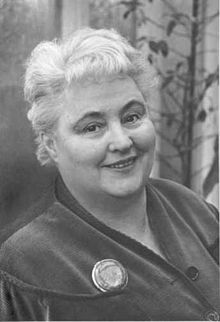
She had been brought up with a workaholic writing ethic - her father wrote thousands of words a week come hell or high water until he died, worn out by the treadmill.  Margery did the same.  She was overweight and in poor health - probably because of thyroid problems that often went untreated.  This was partly her fault - she hated consulting doctors - and partly because the doctors she did consult seem to have been less than competent.  At one point she was sectioned and given electro-convulsive therapy for depression probably caused by her thyroid condition.  As well as health issues, she was constantly pursued by the Inland Revenue and lived, until the end, haunted by the fear that she was going to be made bankrupt by their demands. Margery wrote book after book to pay the tax bills racked up by her previous publications.

Her marriage to Pip, which had begun with such cheerful, youthful optimism, soon stagnated.  Pip was extremely selfish, unwilling to have children, and a serial adulterer.  While he philandered in London, living the high life (he was in the same social circle as Prince Philip), Margery stayed in her Essex home and wrote.  When doctors found a lump in her breast, she ignored it.

Julia at the Book Launch
After her death, Margery’s papers and those of her father, were left to her younger sister Joyce, who had lived with her during the final decade of her life, and - through Joyce - they were made available to Julia Jones.  The results are two carefully researched and beautifully written family stories - 'Fifty Years in the Fiction Factory: the Working Life of Herbert Allingham', and ‘The Adventures of Margery Allingham’.  I enjoyed them both and, as a good biography should, have been tempted to re-read the novels.                                        

Thursday, 31 January 2013

What Light Can Do: Robert Hass

Essays on Art, Imagination and the Natural World.


I've always loved the poetry of Robert Hass, (I have his Apple Trees at Olema) though I had never read any of his essays.  Now, this is rapidly becoming one of my favourite books - on Kindle - and I'm buying a hard copy to read and re-read and underline and scribble in the margins - it's that kind of book.  What he says, and the way he says it, makes it a must-read.

In a week when Sharon Olds won the TS Eliot prize for poetry I re-read an essay sub-titled 'Poor Monkeys and the White Business in the Trees'.  It's a thoughtful discussion of autobiographical poetry about families.  Hass points out that it was a new subject when Robert Lowell published 'Life Studies' in 1959.  'It is a fact,'  Hass observes, 'that [you] can learn nothing about the aunts or the grandmothers of John Donne, Thomas Traherne, Anne Finch, Alexander Pope... John Keats, Emily Dickinson or Robert Browning' from their poetry.  He also feels that it may be a particularly American phenomenon.  'American poetry is full of aunts and grandmothers, but French poetry isn't, or Serbian poetry or Arabic or Brazilian or for that matter, English poetry'. Robert Hass takes us through some theories of Why this might be, which I found fascinating.

One of the essays is a deliberation on war - particularly the Iraq war.  'How did this happen?' Hass asks.  'And why are ordinary Americans not being driven crazy by it?'  The answer he supplies is 'fear, anger and ignorance'.   How could ordinary people be expected to know that 'bombing Saddam Hussein because of a terrorist act perpetrated by Saudi Arabian Wahhabi Muslim terrorists would seem to the people in the Middle East an act of pure aggression against all Islamic cultures by a power that could not distinguish among them.'  But government and the educated media should have been able to and Hass castigates them for their failure to do so, accusing them of 'morally culpable ignorance'.  He states that  'The moral and intellectual failure of American journalists and of political and policy intellectuals was breathtaking'.

There are several 'major' essays in the book;  one of them on 'Chekhov's Anger', which told me quite a lot I didn't know about the author's life as well as providing an illuminating analysis of the work.  Chekhov apparently began his career writing for comic newspapers and magazines in 19th century Russia - the same kind of 'penny dreadfuls' that Herbert Allingham wrote for in Britain.  Chekhov's grandfather had been a serf who had bought his freedom and become a bailiff - the classic case of poacher turning gamekeeper.  Chekhov's father was a small shop-keeper who went bankrupt when he was only 16 and the family moved to Moscow.  Chekhov began publishing stories, sketches and jokes to pay his way through a medical degree.  Soon he was keeping the whole family.

Robert Hass is very good on these early mass-market stories which were the 'equivalent of newspaper cartoons'.  it taught Chekhov a lot about writing - particularly economy.  This is Chekhov writing to Gorky - 'cross out as many adjectives and adverbs as you like.  You have so many modifiers that the reader has trouble understanding and gets worn out'.

Hass points out that these early commercial stories have the same structure as the later stories that Chekhov is famous for.  'They depend on a surprise ending, usually, though not always on dramatic reversal, and the surprise in in one way or another wounding . . .  The gasp that the story evokes, the little cry of surprise and discovery, comes out not just because the ending surprises, but because it fits'.  The stories are also witty and it is 'the terrible presence of wit' that takes the stories from pathos into tragedy.  Chekhov knew what he was doing in his fiction and his drama.  'I finish every act as I do my stories;  I keep the action calm and quiet till the end, then I punch the audience in the face.'

Chekhov's anger came from the violent treatment meted out by his father, which he couldn't forgive, as well as the social injustice he witnessed in a Russia building up to civil war.  Anger, Hass observes, can be 'the wellspring of art'.  It reminds me of  Katherine Mansfield, who said that one of the 'kick offs' for her was a 'cry against corruption'.  Anger motivated many of her stories, and Chekhov was one of her big influences.   She too, wrote only short stories, never a novel.

There are other wonderful essays in this book - 'Howl at Fifty' takes another look at Ginsberg 50 years on and compares the style of it to passages from the Waste Land (I'd never made the connection with Eliot before, but it's so obvious I now feel stupid!).  He describes Howl as 'a kind of exploded, hallucinatory autobiography'.  He talks about the genesis of Moloch and observes that 'Moloch has still got hold of a good chunk of the American soul'.

I also loved 'Imagining the Earth' - his essays on eco-poetry and literature, and one on 'Teaching Poetry' which I can't even begin to precis.  It touches on the oral nature of poetry on the page - poetry is 'a kind of speech that's meant to be said by others'.   In other essays he explores the connections between poetry and the natural world. He is pessimistic about our generation's custodianship of the planet. 'What a depleted world our students are inheriting'.  Will they be able to save it? 'The task may be beyond us.'   But  'We have to act as if we can accomplish it, as if we can preserve that richness and diversity.  We have to act as if the soul gets to choose.'

I'd recommend this book to anyone who loves literature - it's a great companion volume to Robert Hass's collected poems too.  Thoughtful, profound, outspoken - the writings of a compassionate individual who is also a great poet.

What Light Can Do:  Essays on Art, Imagination and the Natural World.
Robert Hass.

The Apple Trees at Olema:  New and Selected Poems
Robert Hass.

Sunday, 25 November 2012

Fifty Years in the Fiction Factory


Fifty Years in the Fiction Factory is not a biography.  It is exactly what it says in the subtitle on the cover ‘The working life of Herbert Allingham’.  I read it because I’m a fan of his daughter, the crime writer Margery Allingham, and I was fascinated to learn about her family background.  I hadn’t known that her father (in fact her whole family) worked in the popular literature industry in the late 19th and early 20th centuries. Herbert Allingham was born into it.

Julia Jones (no relation!) inherited the Allingham family archive when Herbert’s youngest daughter, Joyce, died, and Julia has also written a biography of Margery - soon also to be released as an e-book. The archive has proved to be a wonderful resource - a unique collection of documents giving us a window onto the world of ephemeral popular literature - the soap operas of our great grandparents’ generations.

Fifty Years in the Fiction Factory  is a fascinating account of the growth, flowering and diminishing of mass-market literary culture - the penny and half-penny illustrated weekly papers that my grandmother used to refer to as ‘penny dreadfuls’, but read all the same. Most of the titles have now vanished, but Tit-Bits was still around when I was a child and my mother was still reading Women’s Weekly and My Weekly (in their modern transformations) when she died a few years ago.

This book tells a big part of the social history of Britain - how the weekly papers with their serials and stories both reflected and influenced a sector of society. They often had titles such as ‘A Woman Scorned’, or ‘A Mother Cast Out’, and plots that resemble silent movie classics like ‘The Perils of Pauline’. Like modern day soap operas, they were unashamedly formulaic with every episode ending on a cliff-hanger. Rags to Riches stories were very popular.  Uneducated boys from homes of unimaginable poverty, with dead-end jobs in factories, women who spent their lives in household drudgery, read them or had them read to them.  The periodicals were even sent to the front during the first world war to brighten the lives of the ‘Tommys’. 

Julia Jones clearly describes how changing social conditions - divorce, feminism, education etc, changed the content that Herbert Allingham scribbled every week for 50 years until he died.  He was as much a factory or industrial worker as any of those who bought the papers.  There are no holidays when you have three children to feed and educate and you’re paid by the yard.  There was no welfare state.

Although Herbert’s work was published in almost all the periodicals throughout this time, his name rarely appeared - the authors of serial fiction were usually anonymous.  This seems rather cruel.  Cruel too that Allingham, unlike his daughter, never had the chance to see his fiction between the covers of a book. 

His personal life seems to have been sometimes quite bleak - his wife Em is described as a ‘cough drop’ - a bit of an acquired taste.  She appears neurotic and wilful and her daughter Margery obviously had a difficult relationship with her.  But Em too, was often part of the Fiction Factory - helping Allingham write some of his serials, writing stories of her own. A strange, possibly unrequited, love affair with a doctor resulted in a complete breakdown.  Allingham wrote through it all, producing his 10,000 words a week whatever calamity was taking place at home.

So, at least I now know the context that framed Margery Allingham’s development as a writer.  She described herself once as her ‘father’s apprentice’.  He helped her all he could, though he didn’t always understand her different gifts.

This is a fascinating book, beautifully illustrated with frames from the ‘penny papers’ and it will please those with an academic interest in the history of popular culture as well as the casual reader interested in social history and biography. The paperback is expensive, though it’s a bargain when you think of the research that has gone into it and the amount of information it provides, but the E-book is affordable on Amazon at 7.99.  Hurrah for E-books!!